Key Notes:
1. The IMSS survey captures the real-life experiences of over 17,000 people living with MS across 22 European countries.
2. Fatigue, cognitive difficulties, and bladder problems are among the most burdensome symptoms reported by people with MS.
3. Only 38% of people with MS reported seeing a nurse, highlighting gaps in coordinated, multidisciplinary care.
4. Invisible symptoms such as sexual dysfunction, fatigue, and cognitive impairment remain under-addressed in MS care.
5. The article explores practical strategies for nurses to better support symptom management and improve patients’ quality of life.
As nurses, we see firsthand how complex and varied the experience of living with multiple sclerosis (MS) can be, but there's still a lot we don’t fully understand, especially when it comes to how MS affects people in their everyday lives. Fatigue, pain, mood changes, cognitive difficulties… the list goes on! For many, these symptoms add up to a heavy, and often unrecognised, burden which can severely affect the person’s quality of life.
What makes it even more challenging is that the care people with MS receive isn’t always consistent. Despite our best efforts, there’s often limited data to help us truly see the full picture of what they’re going through.
That’s why the Impact of Multiple Sclerosis (IMSS) survey is so important.1 It offers valuable insight into the real-life experiences of people living with MS, so we, as nurses, can better understand their needs and improve the care we provide.
In this post, we’ll walk through some of the key findings from the IMSS survey and think about what they mean for us in terms of nursing care. As frontline professionals, we play a vital role in helping people with MS manage their symptoms day-to-day. So, understanding the real-life challenges they face isn’t just helpful, it’s essential.
The IMSS survey was led by the European MS Platform (EMSP), working closely with 24 national MS societies across 22 countries. The goal was to achieve a clearer picture of what people with MS are actually experiencing when it comes to their symptoms and the care they receive. More specifically, the survey set out to try to understand how common certain symptoms are, how severe they feel to people living with MS, and how satisfied they are with how those symptoms are being managed.
To gather this real-world insight, the IMSS survey ran online from May to August 2023. It was open to anyone living with MS, completely anonymous, and asked a range of questions about symptoms, care experiences, and how well symptom treatments were working for them.
A total of 17,151 people living with MS from 22 European countries participated in the survey. Most of the respondents were women (81%), and the majority had relapsing-remitting MS (70%), the most common form of MS. On average, participants were 44 years old. Symptoms typically began around age 31, but it often took another 3 years before they received a formal diagnosis.
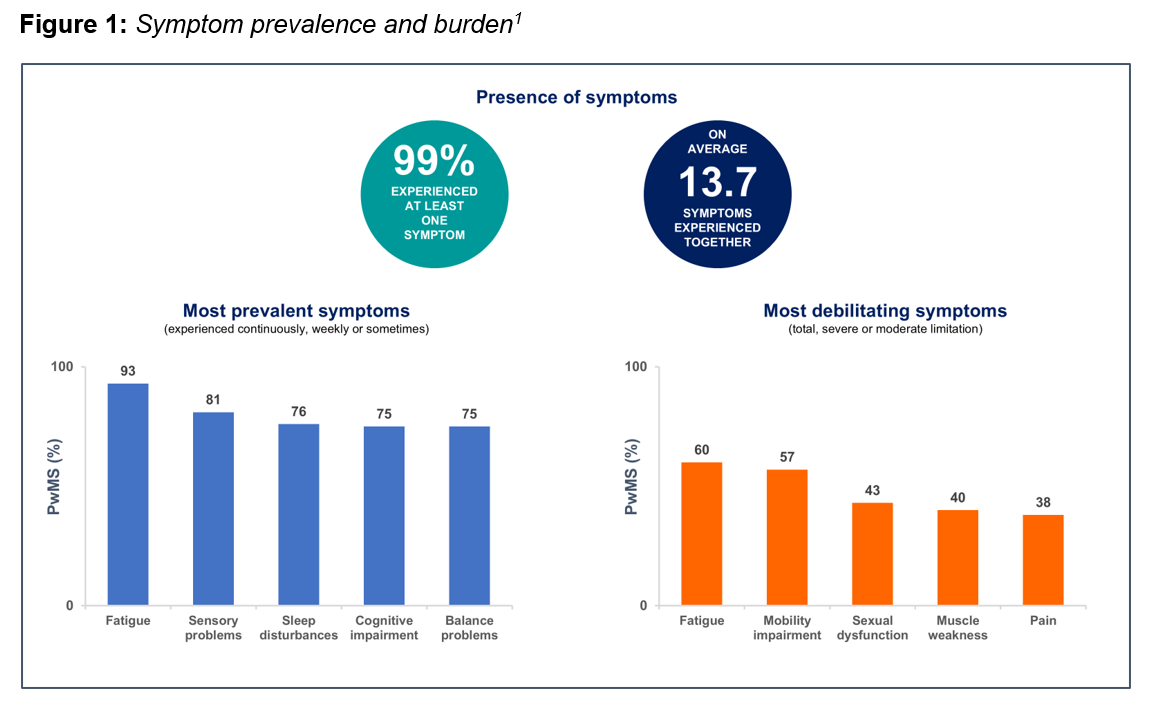
On average, people with MS reported living with around 14 different symptoms — a powerful reminder of just how complex and multifaceted this condition can be. Fatigue, sensory changes, sleep issues, cognitive difficulties, and balance problems were among the most commonly reported symptoms. When asked which symptoms affected their daily lives the most, people with MS identified fatigue, cognitive difficulties, and bladder problems - with mobility impairment and sexual dysfunction as particularly debilitating. Figure 1 illustrates these results in more detail. For nurses, this reinforces the importance of taking a holistic approach to care; looking beyond the visible signs and actively screening for the wide range of overlapping and often less obvious symptoms that can significantly affect quality of life.
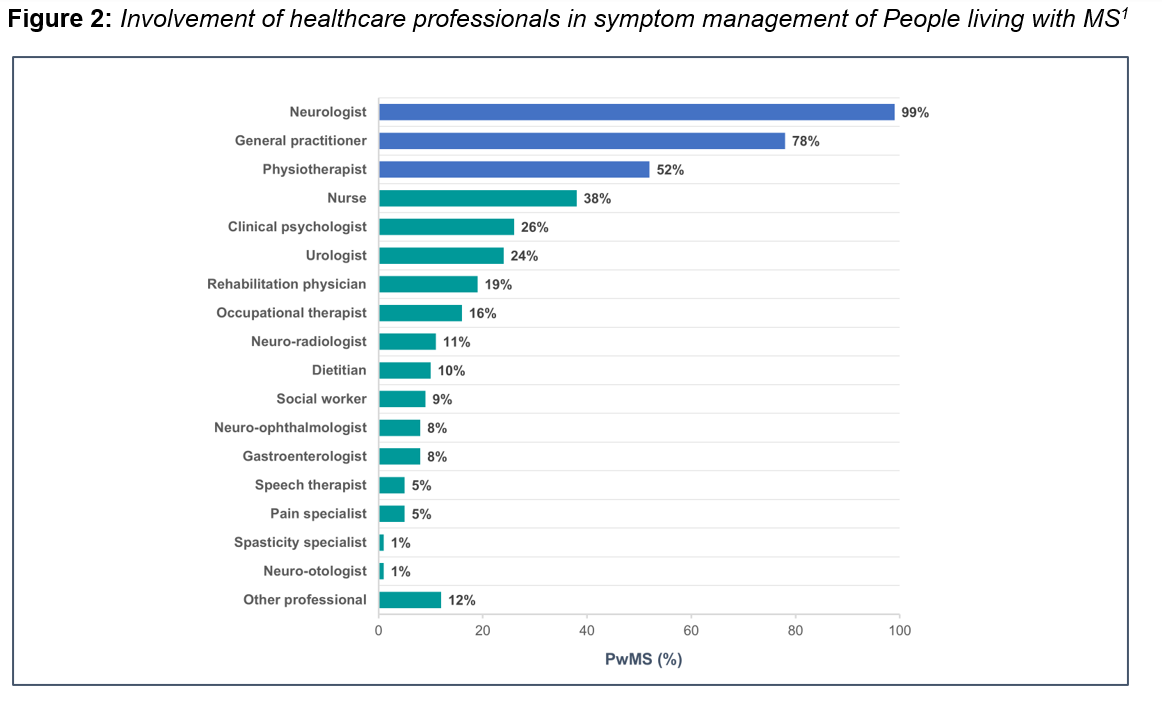
People living with MS typically reported seeing around 4 different healthcare professionals on average. Almost everyone (99%) had consulted a neurologist, and about half had access to physical therapy. But interestingly, only about one in three (38%) said they’d seen a nurse. A detailed breakdown of the healthcare professionals involved is shown in Figure 2. These findings are important because we know that coordinated, multidisciplinary care can make a real difference in managing MS.2 Yet despite the proven benefits, half of the people surveyed said they weren’t receiving this kind of team-based support. This shows we still have work to do in strengthening how we collaborate across disciplines. As nurses, we're a vital part of the multidisciplinary team, often the first point of contact and a consistent presence in the journey of the person with MS.3 It’s up to us to advocate for collaborative care and help ensure that every person with MS has access to the full support they need.
Most people with MS (87%) reported using some form of treatment for at least one of their symptoms, from medications to lifestyle changes and rehabilitation strategies. But despite these efforts, half said they weren’t satisfied with the care they were receiving. Symptoms including sexual dysfunction, fatigue, and cognitive impairment were described as the most difficult to manage effectively.
Many respondents felt they lacked adequate support or practical strategies, especially for the “invisible” symptoms that aren’t immediately obvious to others. For nurses, this is an important reminder to regularly check in on the less visible aspects of MS. Establishing open communication and listening to experiences of invisible symptoms is an important step to ensure people with MS feel heard, supported, and guided toward comprehensive care options.
Of the 13% of people with MS who weren’t receiving care for at least one of their symptoms, nearly a quarter said they’d never been offered any symptom management at all. About a third believed there was no treatment available, or that none was needed. This points to a potential gap in awareness, both among people with MS and healthcare providers. It may also reflect hesitation on the part of the person with MS to speak up, especially when the symptoms are invisible, emotionally distressing, or carry stigma like bladder issues, sexual dysfunction, or mood changes.
As nurses, we play a key role in breaking down these barriers and creating a safe, open space where people feel comfortable discussing all aspects of their MS. We must be proactive in asking the right questions, normalising conversations around sensitive symptoms, and making sure every person with MS knows that support is available and they don’t have to suffer in silence.
The IMSS survey gives us a valuable insight into what life is really like for people with MS across Europe, revealing just how much a wide range of symptoms can affect their daily lives. As nurses, we play a vital role in the multidisciplinary team4 and in helping to manage these symptoms;5 despite this, the survey found that only 38% of people with MS had seen a nurse, and just half were receiving coordinated multidisciplinary care. This falls short of what is recommended for high-quality MS care. For example, the 2022 UK NICE Guideline emphasises that care for all people with MS should be delivered through a well-coordinated, multidisciplinary team, including professionals with specific expertise in MS such as MS nurses, consultant neurologists, physiotherapists, occupational therapists, speech and language therapists, psychologists, dietitians, social care professionals, continence specialists, and pharmacists, to ensure that the full spectrum of needs is met.6
We as nurses can advocate for better care for our patients. Important steps forward include advocating for more collaborative care teams, setting up dedicated MS clinics, and pushing for policy changes that back these integrated care models in all countries across Europe.
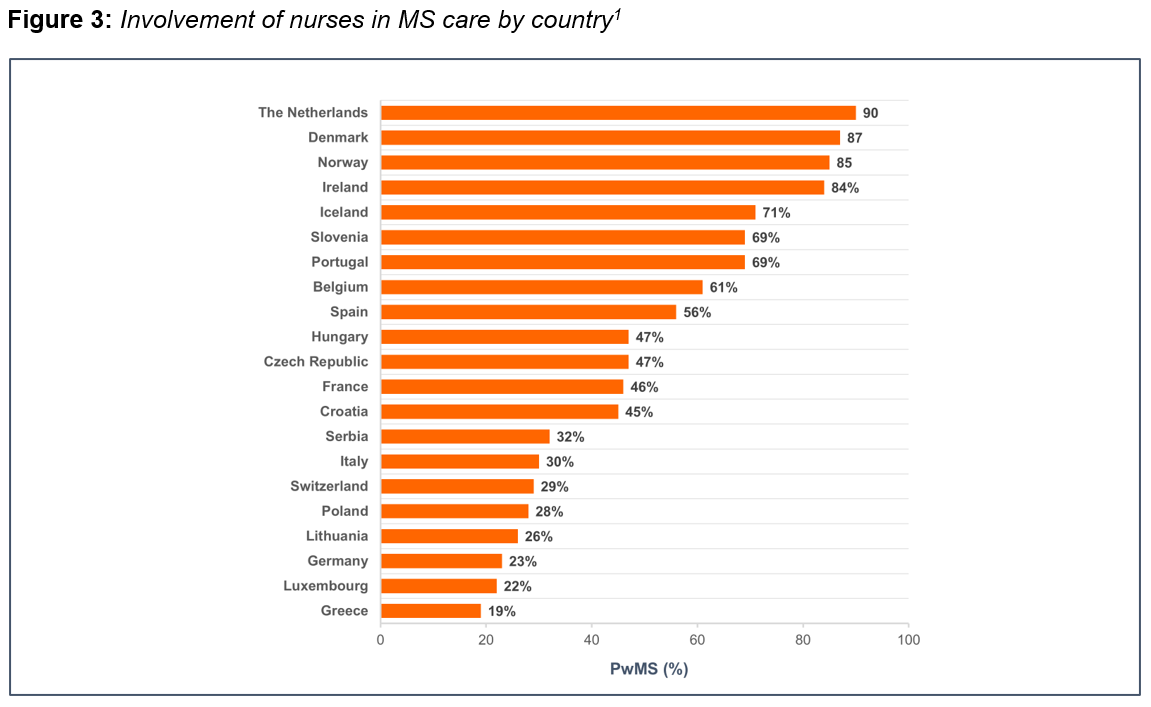
The survey also found considerable variation between countries regarding the involvement of nurses in MS care, with the Netherlands, Denmark, Norway, and Ireland leading the way by involving nurses more effectively in symptom management compared to others (see Figure 3 for an overview of the involvement of nurses by country). The responsibilities of nurses caring for people with MS vary significantly between countries, ranging from limited involvement to empowered roles where nurses can participate fully in integrated care teams. These variations can lead to inequalities in the quality of care and experiences of people with MS. As nurses, we can grow by learning from our international colleagues; sharing best practices and clinical experiences helps us strengthen our skills and feel more empowered in the care we provide moving forward.
Delivering personalised care for people with MS means really understanding the full range of symptoms they’re currently dealing with. The findings from the IMSS survey give us valuable insights that can help shape better care strategies and guide clinical decisions moving forward.
It’s important to stay proactive when it comes to symptom management. Here are a few examples of how we as nurses can make an impact: |
| Take time to explore those “invisible” symptoms highlighted in the survey, especially the ones that people find most debilitating. Start small. Ask that extra question about fatigue or memory problems. |
| Create space for honest conversations around sensitive symptoms like bladder issues or sexual health. Use open-ended questions to initiate discussion. Gently open the conversation using normalising language (e.g., “Many people with MS notice changes in their sexual health—have you experienced anything like that?”). Tools like the Fatigue Severity Scale (FSS), Bladder Control Scale (BLCS), the MS Intimacy and Sexuality Questionnaire-19 and the Brief International Cognitive Assessment for Multiple Sclerosis (BICAMS) can support structured screening. |
| Provide or recommend a symptom diary or mobile tracking app to help people with MS monitor patterns and track how they’re feeling over time. Encourage them to bring this information to future visits for more informed care planning. |
| Ask the person, “What matters most to you right now?” Use their answer to guide symptom management priorities and build goals around their values- whether it’s walking the dog, returning to work, or managing fatigue to attend a family event. |
| Educate patients and caregivers, building health literacy and confidence; provide tailored education on symptom management by sharing trustworthy resources and connecting them to local or online peer support groups. |
| Facilitate communication between team members to ensure care is aligned and consistent. |
As nurses, we have an opportunity and responsibility to bridge these gaps in care. By staying informed about the real challenges people with MS face, we can advocate for more coordinated, multidisciplinary support and ensure symptom management is truly personalised. Whether it’s initiating conversations about “invisible” symptoms, collaborating closely with neurologists and therapists, or pushing for greater nursing involvement in MS care teams, every step we take can improve our patients’ quality of life.
Let’s use these insights from the IMSS survey to fuel change in our practice and help build a future where every person with MS receives the comprehensive care they deserve. By staying curious, advocating for integrated care, and listening closely to what our patients are telling us, we can help close the gaps in MS care and make sure no symptom is overlooked.
Every nurse interaction is a chance to uncover hidden symptoms and improve daily life for people with MS. By taking these steps, we can ensure our patients feel seen, heard, and supported every step of the way.
Interested in attending the webinar? You can register here.
Please be aware that the final date still needs to be confirmed and will be communicated soon.
References
1 Feys P, Moghames P, Kasilingam E, et al. Prevalence, severity and impact of MS symptoms, and use of services in Europe: Results from the large-scale IMSS survey. Mult Scler J. 2024;30(3S):1148–1211. ECTRIMS 2024 – Late Breaking Poster.
2 Sorensen PS, Giovannoni G, Montalbam X, et al. The multiple sclerosis care unit. Mult Scler J. 2019;25:627-36.
3 Van Hijfte L, Cambron M, Capron B, et al. Multiple Sclerosis Multidisciplinary Care: A National Survey and Lessons for the Global Community. Mult Scler Relat Disord. 2024;85:105540.
4 Witzig-Brändli V, Lange C, Gschwend S, et al. “I would stress less if I knew that the nurse is taking care of it”: Multiple Sclerosis inpatients’ and health care professionals’ views of their nursing-experience and nursing consultation in rehabilitation—a qualitative study. BMC Nurs. 2022;21:232.
5 MS Nurse PRO Workload survey, ECTRIMS poster 2025
6 NICE Guideline 220. Multiple sclerosis in adults: management. Published June 2022. Available at https://www.nice.org.uk/guidance/ng220/chapter/Recommendations#coordination-of-care (accessed September 2025)