Europe’s healthcare systems are facing unprecedented challenges: an aging workforce, severe staffing shortages, and increasing reliance on foreign-trained professionals. At a public hearing organised by the European Parliament’s Committee on Public Health and Committee on Employment and Social Affairs, attended by MS Nurse PRO as part of its advocacy activities, experts from WHO-Europe, Zorgnet-Icuro (Flanders), the European Public Service Union (EPSU), and the Italian Federation of Health and
Hospital Companies (FIASO, Italy) shared their perspectives on the crisis and proposed urgent solutions. Here’s a summary of their key messages.
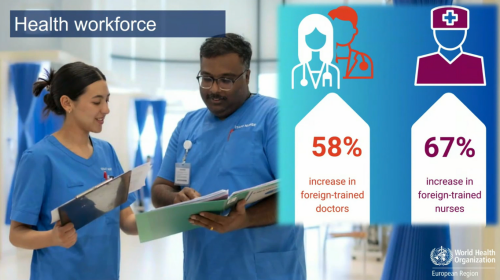
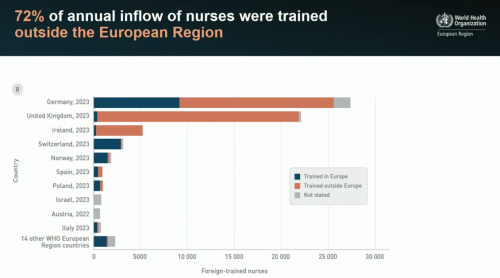
Europe’s healthcare workforce is aging, overstretched, and increasingly reliant on foreign-trained professionals. According to WHO Europe’s 2022 report, "Health and Care Workforce in Europe – Time to Act," the density of medical doctors has increased by 20% over the past decade. However, 58% of this growth comes from foreign-trained doctors, and 67% from foreign-trained nurses. 72% of annual inflow of nurses were trained outside of the European Region, raising concerns about sustainability and self-sufficiency.
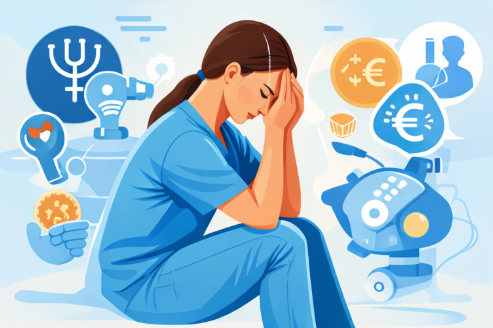
WHO-Europe is taking action with EU-funded projects on nurse retention and recruitment, as well as a first-ever survey on health workforce mental health and well-being, launched on 10 October. Findings highlighted that one in three nurses and doctors face mental health challenges, underscoring the urgency of the situation.
Policy Recommendations: To build resilience, Dr. Azzopardi emphasizes the need to improve retention strategies—such as better salaries, career structures, mental health support, and rural incentives. She also advocates for investing in domestic training to reduce dependency on international recruitment and enhancing digital and AI literacy to ensure technology supports, rather than burdens, healthcare workers.
Her closing message was clear: Europe’s health system resilience depends not only on medicines and supplies but on the resilience of its health workforce.
Flanders, like much of Europe, is on the brink of an elderly care crisis. By 2030, the population of those aged 85 and older will grow sharply, and by 2050, Flanders alone will have half a million people over 85—in a region of just 7.5 million. Compounding this challenge is a shrinking labor force: for every 100 people leaving the workforce, only 80 new workers join, worsening shortages.
Cloet argues for an EU Master Plan that involves all stakeholders—care providers, governments, social partners, and vocational groups. She outlines three prerequisites for success:
Concrete Priorities: Cloet calls for reducing administrative burdens, supporting skills development and reskilling, protecting workers from aggression with a zero-tolerance policy, and strengthening mentoring programs to reduce early exits from the profession. She also advocates for shared employment models—where one contract covers multiple employers—and faster recognition of foreign qualifications.
With support from Maria-Louise Cabral (DG Employment) and the forthcoming EU Quality Jobs Roadmap, Cloet’s broader message is: Europe must provide space, funds, and support for innovation, not new restrictive rules. She also raised concerns about health workers in conflict zones, such as Gaza, urging the EU Parliament to take responsibility.
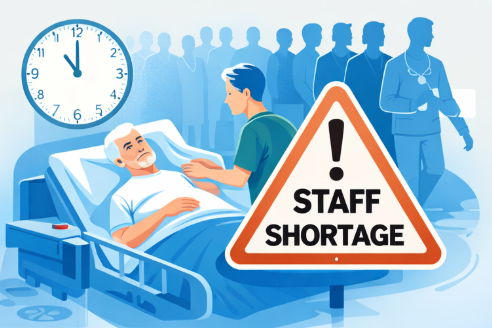
The EU is facing a public health crisis, with a staggering shortage of 1.2 million health workers—a gap that continues to grow. The consequences are severe: long waiting lists, overcrowded hospitals, and a lack of preparedness for future crises. Healthcare workers are under immense pressure, with ripple effects extending to families and even emergency services. For example, firefighters responding to ambulance calls are often delayed because hospitals lack the staff to receive patients. The mental health toll is equally alarming, with children of health workers sometimes left unattended during long shifts—a reality illustrated by drawings from Swedish unions.
EPSU and the European Federation of Nurses propose a comprehensive EU-level action plan to address these shortages. Given that 80% of health workers are women, the plan must be gender-sensitive and include:
Goudriaan highlights a key disagreement with employers: unions oppose relaxing the Working Time Directive. Instead, they call for stricter enforcement to protect work-life balance and reduce overtime violations. He also warns that decreasing EU healthcare investment undermines resilience and notes the rise in third-party violence against staff, which requires urgent EU attention.
Italy’s healthcare workforce challenges mirror those across Europe but are particularly acute. The country faces a severe doctor-nurse imbalance, with only 6.2 nurses per 1,000 people—well below the EU average of 8.4. The ratio of doctors to nurses is 1.5, among the lowest in Europe, and the workforce is aging rapidly: over half of doctors are 55 or older, with 27% over 65—the highest proportion in Europe.
Between 2012 and 2017, Italy’s National Health Service lost 26,000 staff, and from 2019 to 2022, another 11,000 doctors left the system. Shortages are particularly severe in anesthetics, emergency medicine, and general practice.
Key Problems:
Proposed Solutions: Dr. Migliore advocates for political choices that support both young and older workers, as well as incentives beyond salary, such as housing, family support, and welfare benefits. He also proposes creating a national mobility platform to help health workers move within the system and improving the attractiveness of nursing and other hard-hit specialties.
On the legal front, Italy has already adopted a law against violence on health workers, which includes arrest provisions, and a law on task shifting to expand the roles of nurses. Dr. Migliore also emphasizes the potential of artificial intelligence to reduce administrative burdens and enhance patient care. FIASO has established an AI Observatory and the "NextAge" innovation platform to explore these opportunities.
His conclusion: Investment in the health workforce is not a cost, but a multiplier of social and economic value. Urgent action is needed to ensure universal, fair, and sustainable healthcare.
WHO-Europe calls for better retention, domestic training, and smart integration of AI. Zorgnet-Icuro advocates for a flexible, trust-based EU Master Plan that links healthcare to broader social policies. EPSU demands binding frameworks on staffing ratios, mental health protections, and fair wages. FIASO underscores the need for incentives, legal protections, and innovation to make healthcare careers attractive and sustainable.
In this context, MS Nurse PRO’s mission is to ensure specialized nurses are not just represented, but actively shape solutions in policy debates. We bring the realities of nursing practice to the forefront, ensuring policies reflect the needs of nurses and their patients.
To drive this forward, we’re launching two key initiatives:
We are currently collecting testimonials to strenghten our messages. We are looking for nurses caring for people with MS and people with MS who would be willing to share their experiences on caring/receiving care in their national health system. We encourage help us and share your experience by clicking below:
I want to contribute as a nurse!
I want to contribute as a patient!
What’s next? Stay tuned for further updates, and let’s continue this conversation. Your voice matters in shaping the future of healthcare.